This blog is now located at http://declanhughes.blogspot.com/. You will be automatically redirected in 30 seconds or you may click here. For feed subscribers, please update your feed subscriptions to http://declanhughes.blogspot.com/feeds/posts/default.
Jack Donovan
The Film Encyclopedia 6th Edition : The Complete Guide to Film and the Film Industry edited Ephraim Katz, Ronald Dean Nolan: Donovan, Jack (John). Director, Screenwriter. Born on June 16, 1964 in Dublin, Ireland; ed Trinity College, Dublin (Music); Royal Irish Academy of Music. A trained singer, he sang several tenor roles in opera productions in Ireland and the UK. His debut film was a low-budget, high energy rendering of Verdi’s La Traviata called Scarlet For You (1990) set in contemporary Dublin which won much critical acclaim and proved a surprise American success. (Donovan himself sang the role of Alfredo Germont in the film, but has not sung professionally since.) He won international accolades with his next film, A Terrible Beauty (1992), a visionary tale of political violence and taboo sexuality which won an Academy Award nomination for Best Original Screenplay. His first full American picture, Ocean Falls (1994), a haunting romance among surfers and Hollywood hopefuls, loosely adapted from The Slide Area and The Goodbye People by Gavin LAMBERT, was much admired, and Donovan won the Oscar for Best Adapted Screenplay. Studio assignment The Armageddon Factor (1995), an espionage thriller adapted from a bestselling novel, featured A-list stars and was a massive commercial success. This enabled Donovan and his longtime producer, Maurice FAYE, to raise the budget for The Dain Curse (1997), a dreamlike, disturbing adaptation of the Dashiell HAMMETT novel that divided critics and performed indifferently at the box office, though netting Donovan another adapted screenplay award. Twenty Grand (1999) was a mystical road movie set in the Sierra mountain range, described by the director as an homage to Michelangelo ANTONIONI. It pleased neither critics nor audiences. Donovan spent three years directing opera in New York and Rome and working as a script doctor before a triumphant return in 2003 with The Man in the High Castle, a provocative adaptation of Philip K. DICK’s alternative history novel. The film was an international success and was nominated for seven Oscars, winning four, including best picture and best original screenplay. He followed this with a big budget historical extravaganza, The Last Anniversary (2005) which has been described as a disaster on the scale of Cleopatra and Heaven’s Gate. Along with producer Maurice FAYE, Donovan has worked with the cinematographer Mark CASSIDY on every film (with the exception of The Armageddon Factor). Frequently ranked among other independent directors who came to prominence in the nineties, including Quentin TARANTINO, Paul Thomas ANDERSON and David FINCHER. Donovan is divorced, and has homes in Dublin, Los Angeles, New York and Rome. FILMS (as director-screenwriter): Scarlet For You (Ire.) 1990; A Terrible Beauty (Ire/US.) 1992; Ocean Falls (US) 1994; The Armageddon Factor (US) 1995; The Dain Curse (US) 1997; Twenty Grand (US) 1999; The Man in the High Castle (US)(2002); The Last Anniversary (US) (2005); Nighttown (Ire/US) (2010).
Audio book
The Audio Publishers' Association has announced the nominees for the 2010 Audie awards, and the Isis recording of The Dying Breed (US title The Price of Blood) has been nominated in the Mystery category, alongside C.J. Sansom, Walter Mosley, Ross Macdonald and Arthur Conan Doyle (who are these people?) Major credit for this should of course be directed towards my old friend and colleague Stanley Townsend, whose inspired rendering of the book (he do the private eye in different voices) has rightly caught the judges' ears. Stan was a founder member of Rough Magic and we worked together many times, most notably for the purposes of this blog when he played Count Fosco in my adaptation of The Woman in White, complete with six live mice and a climactic swordfight with Walter Hartright (my own rather broad story embellishment), during which, on a newly-varnished dress rehearsal floor, Stan nearly lost an eye. He also played PI Daniel Webster, the hero of Dashiell Hammett's last, "lost" crime novel, in my first play, I Can't Get Started. (Note to Hammett fans: I made it up.) He now enjoys a very successful career on stage and screen. Working with brilliant actors like Stan made me quickly realise that my future lay on the other side of the footlights. I am lucky to have him read my books.
The Godlike Genius of Preston Sturges
A director, John L. Sullivan, who wants to make a second socially relevant movie, dukes it out with two producers, LeBrand and Hadrian, who didn't want to make the first:
John L. Sullivan: You see? You see the symbolism of it? Capital and Labour destroy each other. It teaches a lesson, a moral lesson, it has social significance - Hadrian: Who wants to see that kind of stuff? It gives me the creeps. John L. Sullivan: Tell him how long it played in the Music Hall. LeBrand: It was held over a fifth week. Hadrian: Who goes to the Music Hall? Communists! John L. Sullivan: Communists? This picture is an answer to communists. It shows we're awake and not dunking our heads in the sand like a bunch of ostriches. I want this picture to be a commentary on modern conditions. Stark realism. The problems that confront the average man! LeBrand: But with a little sex in it. John L. Sullivan: A little, but I don't want to stress it. I want this picture to be a document. I want to hold a mirror up to life. I want this to be a picture of dignity! A true canvas of the suffering of humanity! LeBrand: But with a little sex in it. John L. Sullivan: With a little sex in it. Hadrian:How about a nice musical? John L. Sullivan: How can you talk about musicals at a time like this, with the world committing suicide, with grim death gargling at you from every corner, with people being slaughtered like sheep - Hadrian: Maybe they'd like to forget that. John L. Sullivan: Then why did they hold this one over for a fifth week at the Music Hall? For the ushers? Hadrian: It died in Pittsburgh. LeBrand: Like a dog! John L. Sullivan: Aw, what do they know in Pittsburgh... LeBrand: They know what they like. John L. Sullivan: If they knew what they liked, they wouldn't live in Pittsburgh!
***
LeBrand: Look, you want to make O Brother Where Art Thou? John L. Sullivan: Yes! Hadrian: Now, wait a minute - LeBrand: Then go ahead and make it. With what you're getting I can't afford to argue with you. John L. Sullivan: That's a fine way to start a man out on a million dollar production. LeBrand: You want it, you got it. I can take it on the chin. I've taken it before. John L. Sullivan: Not from me, you haven't. LeBrand: Not from you, Sully, that's true. Not with pictures like So Long Sarong, Hey Hey In The Hay Loft, Ants In Your Plants of 1939, but they weren't about tramps, and lockouts and sweatshops, and people eating garbage in alleys, and living in piano boxes, and - Hadrian: And phooey! LeBrand: They were about nice clean young people who fell in love, with laughter and music and legs.
Preston Sturges - Sullivan's Travels (1941)
http://www.youtube.com/watch?v=teTQF04jxRc
Saturday in the People's Park
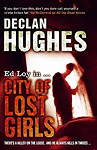
On this coming Saturday afternoon (January 30th) at 2 o'clock, I'll be reading with Arlene Hunt at the Tea Rooms in the People's Park in Dun Laoghaire. The reading is part of a series called iad-T in the Park. And I'll be on RTE Radio's Arena programme on Thursday night talking about crime fiction in advance of the event. If any of you are in the area, please drop in: they serve very good coffee there, among other things. I'll be reading from City of Lost Girls, the fifth Ed Loy novel, which won't be out until April, and Arlene will be reading from her new book Blood Money.
Cool people saying nice things
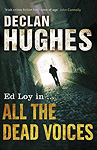
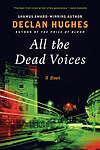
While this blog lay unattended for most of last year, some very cool people said some very nice things about All The Dead Voices, and I thought I would be remiss in not bringing a few of them to your attention:
Marian Keyes in The Irish Times: I love a good thriller and there have been excellent ones this year from Michael Connolly, Ian Rankin and Val McDermid, but my favourite has to be Declan Hughes's All The Dead Voices, the fourth book starring Ed Loy and the best yet. Hughes delivers a cracking plot and although he writes with passion and humour about contemporary Ireland, in some ways his books are reminiscent of the hard-bitten noir of the likes of Raymond Chandler.
Andrew Taylor in The Spectator: Dublin has a special relationship with fiction, which in recent years has inspired some excellent crime novels. Among them is Declan Hughes's Ed Loy series, which gives a distinctively Irish twist to the flawed private investigator of American pulp fiction. Loy has many of the classic characteristics of the breed, including the tastes for hard liquor, lovely women and lost causes. But Hughes places his protagonist in a sharply observed contemporary Dublin; and his plots erupt from the city's faultlines.
In All The Dead Voices, the fourth novel in the series, a woman hires Loy to investigate a cold case - the murder of her father, a tax inspector with a dangerous habit of asking questions about the ill-gotten gains of powerful and superficially respectable people. Organised crime and dissident Republicanism inhabit a shady underworld of drugs, clubs and guns. This is a novel about how the present struggles to come to terms with the past: 'There's a reckoning you can make with history, a reasonable settlement, ' Loy believes. 'And then there's a kind of morbid fascination that borders on obsession . . .' On one level this is Dublin Noir at its best. On a deeper level, the real subject of Ed Loy's investigation is modern Ireland itself.
And in his books of the year, also in The Spectator: Declan Hughes’s All the Dead Voices is an exuberantly written slice of Dublin noir: a Chandleresque private eye novel set in modern Ireland that keeps within the conventions of the genre but reinvigorates them.
Margaret Cannon in The Globe and Mail: Fans of the classic hardboiled mystery are a difficult group to satisfy. The three are often copied, but seldom do writers actually manage to combine great character-driven novels with iconic prose styling, terrific dialogue and a stellar sense of place. Dubliner Declan Hughes delivers all that and more; this series is Chandler updated and polished to hardboiled perfection. Ed Loy once lived in L.A., but he's returned to his Irish roots. His Dublin is the city of the Celtic dream, with ex-IRA thugs transformed into pseudo-English gentry, where skinny new mothers huddle outside the Maternity Hospital sucking on cigarettes while, across town, thin rich wives head up charity drives and husbands field race horses and ride the property roller-coaster. Ed Loy, kitted out in his handmade linen suits, cashmere coats, Dax lace-ups, French cuffs and sterling links, is literally tailor-made to be the investigator of the hour, at £1,000 a day. He has two cases going. The first is to find the killer of a local soccer star, the brother of an old friend. The boy may have been a drug peddler or worse, but he died on Loy's watch, and Loy considers himself responsible to the family. Then there's sexy little Anne Fogarty, whose father was murdered 15 years earlier, supposedly by her mother's lover but, Anne claims, really by one of three once-powerful IRA leaders, two of whom are now equally powerful heads of crime families and the third a leader of Dublin society. Old politics and new money make very strange bedfellows in the New Ireland. Hughes weaves all the history, background and conflict into clear, elegant prose. This isn't a wordy novel with lots of filler, food and bad sex. Every paragraph matters, and the dialogue snaps, as Loy drifts from high Irish to Dublin drawl with wit and charm. This is the fourth novel in this fabulous series, and I've loved them all. You will too. Oline Cogdill in Mystery Scene: Declan Hughes has become to Ireland what Ian Rankin is to Scotland. Irish playwright Hughes' evocative look at Dublin and the city's changes are just a couple of the pleasures in his exciting fourth novel. In All the Dead Voices, Hughes focuses on Ireland's violent past, especially "the Troubles," that time from the 1960s to about 1998 when Northern Ireland's political conflicts exploded across the country and beyond. Private detective Ed Loy tackles two cases that intersect. Ann Fogarty hires Ed to find out who killed her father, a revenue inspector, more than 15 years ago. The police had arrested the lover of Ann's mother, but the man was acquitted and Ann had never believed he was the killer. At the same time, Ed is asked to keep an eye on a rising soccer star who may be involved with a drug dealer. Ed finds that both cases involve former members of the Irish Republican Army (IRA) and Irish National Liberation Army (INLA). For the most part, these men, still hardened by their past, have tried to legitimize their business dealings. But they tend to brush off the many casualties of their violence with the mantras: "It was regrettable...It was wrong...It shouldn't have happened." Loy is sick of the cavalier attitude that allows these former rebels to avoid responsibility for their actions. "History?" he says incredulously. "Bloodshed and glory and death." Adding to this view of Ireland's past, All the Dead Voices takes place during Easter weekend, a pivotal time of "the Troubles." Hughes offers a vivid portrait of Ireland, depicting a country that just a few years ago was in the midst of an economic boom that has since gone bust. The excellent All the Dead Voices surpasses even last year's The Price of Blood, which earned Hughes an Edgar nomination.
Declan's iPod - Top 25 Most Played
- Martin Wynne's/The Longford Tinker - Bothy Band - The First Album
- No Cars Go - The Arcade Fire - Neon Bible
- Window In the Skies - U2 - Single
- Beverley Penn - The Waterboys - This Is The Sea [Disc 2]
- The Hardest Part - Coldplay - X & Y
- Break Me - The Lemonheads - Car Button Cloth
- The Untouchables (End Title) - Ennio Morricone - The Untouchables
- Breathe - U2 - No Line On The Horizon
- Death Theme - Ennio Morricone - The Untouchables
- Glastonbury Song - The Waterboys - Dream Harder
- Not Forever - Popsicle - Popsicle
- L.A. Confidential - Jerry Goldsmith - L.A. Confidential
- Jesus, Etc. - Wilco - Yankee Hotel Foxtrot
- Electrical Storm (William Orbit Mix - Radio Edit) - U2 - Single
- Hammett - John Barry - Zulu: The Film Music of John Barry
- End Titles - Carter Burwell - Miller's Crossing
- Reckoner - Radiohead - In Rainbows
- Do You Realize? - The Flaming Lips - Yoshimi Battles The Pink Robots
- There There - Radiohead - Hail to the Thief
- Hopeless - The Wrens - The Meadowlands
- Descending - The Black Crowes - Amorica
- Rearviewmirror - Pearl Jam - Vs.
- Unknown Caller - U2 - No Line On The Horizon
- Calling On Mary - Aimee Mann - One More Drifter In the Snow
- Victorious - Ennio Morricone - The Untouchables
The main changes this year are the new entry of two songs from No Line On The Horizon (a brilliant record) and the high placing for the joyous Window in the Skies, a song from the Rick Rubin sessions (I'd like to hear more of them). But largely this is stuff I've been listening to for three or four years, and since it's the first playlist I plump for when I can't decide what I want to listen to (the tyranny of choice) I expect to be listening to most of it in three or four years time. The only track to feature in a Loy book is the delirious pair of reels by the Bothy Band, which caused Ed to drive too fast in The Price of Blood/The Dying Breed. It has occasionally felt strange to be listening to Aimee Mann's Calling On Mary out of season (Christmas in July) but it's a great song from an extremely melancholy album, although if the yuletide blues are your thing and your body isn't coming up with the anti-seratonin automatically, Aimee will provide. And I would not be surprised to see another Christmas record, Sister Winter by Sufjan Stevens, on the list next year, as I am currently playing it ten times a day. I could say that I listen to a lot of jazz and a lot of classical music and a lot of soul and funk and that I have more songs on my iPod by Frank Sinatra than any other artist (1007, if you're asking, and that's before I've uploaded the Frank Sinatra: New York box set I got for Christmas) and where are Bruce and the Stones and Led Zeppelin, never mind all those indie bands whose names I can't remember but whose albums I buy religiously every year because they made the top ten lists in all the music magazines the previous year, but this is the music I've listened to most: the iPod doesn't lie. Not even, I regret to say, about Coldplay.
Eleven things in January
Years ago, in a column in the New Statesman, Sean French said that the tagline to the movie Love Story - love means never having to say you're sorry - was not just wrong, it was the precise opposite of the truth. In his experience, love meant always having to say you're sorry. This has been my experience also.
On Middle Abbey Street once, two old ladies, sheltering in the doorway of a shop, beckoned to me as I passed. "Sorry to bother you," one of them said. "We were just wondering," said the other. "Do you think this is a shower?" "Or is it rain?" I took a moment. "Rain," I said. Both ladies thanked me, and then the second turned to her companion with the look that is second nature to old ladies the world over, the look of mild triumph that means, "See?"
My favourite book when I was a child was The Magic City by E. Nesbit. It had 333 pages. It's the story of an unhappy boy who builds a city out of bricks and blocks and ornaments and books and in the moonlight, the city becomes real and the boy enters it and finds a way out of his unhappiness. I read it fourteen times.
The first single I bought was Ride A White Swan by T. Rex. My first LP was Slayed? by Slade. I was in love with Marc Bolan when I was eight, so much so that I wrote poetry about hobbits and elves, just like Marc, and made the mistake of showing it to The Lads, who never let me forget it. I was not in love with Noddy Holder, or at least, not in that way.
Myles na gCopaleen numbered among the worst clichés about Christmas "I do always think it is a sad time" and "Above all, 'tis a time for the children." (I quote from memory.) I took these to heart at seventeen, resolving never to utter anything so crass. In the last few weeks, I gave voice, with complete sincerity and no embarrassment, to both of these sentiments.
When I was seven, I refused to go to a magic show in Our Lady's Hall because older girls told me the magician had made people's heads disappear and they never got them back. Those naughty older girls!
The first time I got drunk, I was eleven or twelve. I bought a flagon of cider, without being asked my age or challenged in any way, and brought it home and drank it in my bedroom at high speed. And felt nothing. No flights of fancy, no wit or wisdom, no falling down, no seeing the funny side. An older boy had told me that vinegar was an antidote to alcohol, so I found a bottle of malt vinegar in the kitchen and drank as much of it as I could, and was vomiting by the time my mother got home. I got the next day off school. I never told anyone what I had done.
Wrangler jeans were the thing because of the patch on the back pocket. And a Wrangler jacket! I never had one. If there is one thing I could change about my childhood, it would be to have had a Wrangler jacket when I was twelve, so that, when I reached fourteen, it would have been perfectly faded. Although that is not the one thing about my childhood I would change.
My first kiss was in a stable. The girl is dead now. The boy she kissed straight after me is dead as well. We used to pick elderberries in the Gut by the railway tracks. I went to his funeral and met a friend in the churchyard afterwards, who had arrived late and thought it was the father who had died, not the son. When I told him, at first he thought I was joking. What kind of joke would that have been?
The NME, which I read every week between 1978 and 1986 without missing a single issue, once suggested a title for a great "lost" Pogues song: Sorry About Your Coat, But I'm on Antibiotics and I Haven't Had My Tea.
If I were king for a day, I would lay railway track so that no one was further than a few miles from a station, and I would make the carriages comfortable and the food delicious and the drinks superior and the railway hotels immaculate and the tickets affordable, and I would make it illegal, possibly a hanging offense, for anyone not to use them. As Johnny Mercer knew, there is nothing better than a train: And you see Laura, on the train that is passing through, Those eyes, how familiar they seem. She gave your very first kiss to you, That was Laura, but she's only a dream. Labels: E Nesbit, Johnny Mercer, Marc Bolan, Sean French
Reviews, quotes and a trip to New York...
ALL THE DEAD VOICES has been out for couple of weeks in Ireland and the UK, and has had nice reviews in the Irish Times, Sunday Tribune, Irish Independent, Times of London and on the website Euro Crime. Here are the links:
www.irishtimes.com/newspaper/weekend/2009/0404/1224243990592.html
www.independent.ie/entertainment/books/the-ira-gangland-and-another-long-good-friday-1689587.html
www.tribune.ie/arts/article/2009/apr/12/crime-all-the-dead-voices/
Val McDermid said: "If you don't love this, don't you dare call yourself a crime fiction fan. Declan Hughes does for Dublin what Raymond Chandler did for LA, warts and all."
Laura Lippman said: “With ALL THE DEAD VOICES, Declan Hughes once again demonstrates that the private detective novel can be vital, modern and relevant in the right hands—and the right setting. His shotgun marriage between this sturdy American form and Ireland’s forlorn, complicated history has proven to be one of the more inspired concepts in contemporary crime fiction.”
And with that, I'm out of here. I fly to New York on Tuesday, where I will be hanging out and doing all things Edgar for the week. I'll be at the MWA anthology launch at Mysterious Bookshop on Tuesday at six; I'll be at the MWA symposium on Wednesday, and at the Partners & Crime party that evening, and of course, I'll be at the awards dinner on Thursday night. I look forward to catching up with folk I'd normally only see at Bouchercon, to being in the same room as James Lee Burke, and of course to the shot in the arm that is New York City.
All The Dead Voices - Events
I'm doing a couple of Irish events over the next while to mark the publication of the fourth Ed Loy novel, All The Dead Voices, in Ireland and the UK (it's not out in the US until July). First up, I'll be reading with the splendid Brian McGilloway in Waterstone's, Dawson Street, Dublin on Tuesday, April 14th at 6.30. Then on Thursday the 16th, again with Brian, I'll be reading at David Torrans' wonderful No Alibis bookstore in Belfast at 7.oo. In May, I'll be appearing at CrimeFest in Bristol (May 14-17). I'll be on a panel on Thursday the 14th at 4.30, talking forgotten authors with Mary Andrea Clark, Barry Forshaw, Sarah Rayne and Martin Edwards. I suggested Margaret Millar, who is pretty much out of print everywhere now, and her husband Ken, who was once rather better known as Ross Macdonald, but who, despite my insistence on namechecking him everywhere I go to a degree that borders on the pathological, is largely forgotten these days - witness the recent Guardian list of crime novels you had to read before you died, which found room for five from Agatha Christie, four from Michael Dibdin and three from Ian Fleming but nothing from either Millar. I'll also be on a panel at 9.30 on Saturday morning with Gyles Brandreth, Judith Cutler, Andrew Pepper and David Stuart Davies called: Criss Cross: Conan-Doyle & Poe Anniversary Panel - Past & Present, which will discuss the evolution of the police procedural and PI sub-genres over the years. In July, I'll be in Harrogate for the Theakstons Old Peculier Crime Writing Festival, where I'll be taking part in a panel called Emerald Noir on Saturday July 25th at 10.30 am with fellow Irish crime writers Ken Bruen, Brian McGilloway, Gene Kerrigan and Ruth Dudley Edwards. Coupled with the fact that it's St. Patrick's Day tomorrow, I should probably round out this post with some kind of summons to celebratory glass-hoisting and such, and normally would, but I'm off booze for Lent this year. In theory, or at least, in Ireland, you're allowed Paddy's Day off Lent, but I don't think I'm going to avail of that particular indulgence. If I were anywhere else, you bet, but Paddy's Day in Dublin is like an advertisement for sobriety, an ugly, joyless festival of drunkenness. It's too close to home; it's all A Bit Too Irish.
|